
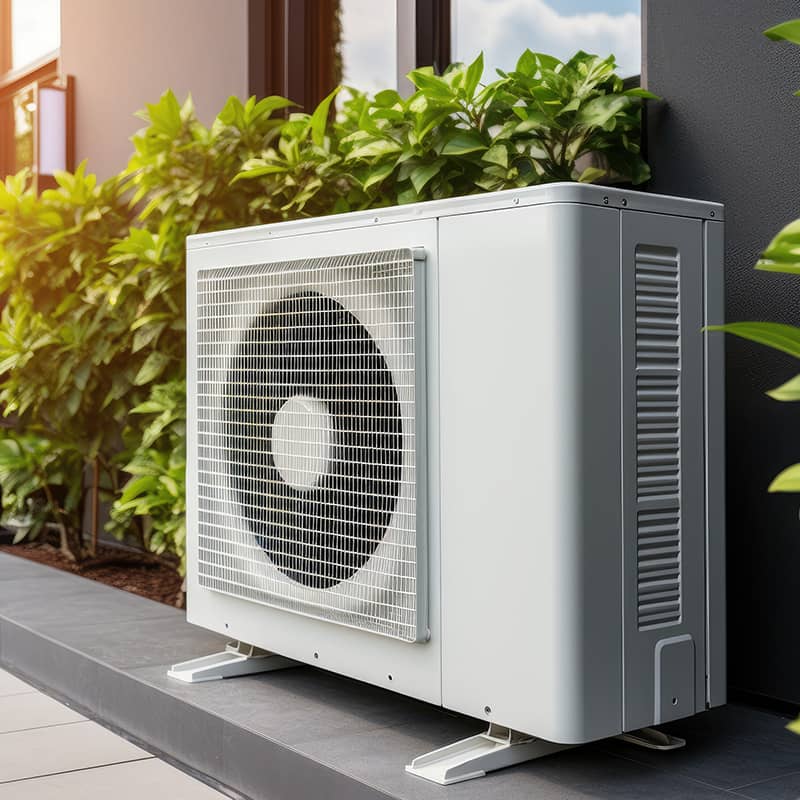
Energy costs are one of the most significant overheads for any commercial operation. Whether you run a retail unit, a manufacturing facility, or a busy office block, heating and cooling your premises accounts for a substantial portion of your energy bill. That is why more UK businesses are turning to heat pump technology and asking whether it could work for them.
At Weatherite, we have been delivering energy-efficient HVAC solutions for over 50 years. In this guide, we break down exactly how heat pumps work, what the benefits are for commercial properties, and what you need to consider before making the switch.
What Is a Heat Pump?
A heat pump is a device that moves thermal energy from one place to another rather than generating heat directly. Think of it like a refrigerator working in reverse: instead of pulling heat out of a cabinet and expelling it into your kitchen, a heat pump pulls heat from the outside air (or the ground/waste process heat) and transfers it inside your building to warm it or into a water loop to warm up your water reducing heating bills.
The most common type for commercial use is the air source heat pump (ASHP), which extracts heat from outdoor air even when temperatures drop below zero. Ground source heat pumps (GSHP) work on the same principle but draw warmth from stable ground temperatures, making them highly efficient in the right setting.
Crucially, heat pumps are not just for heating. Modern systems can reverse the cycle entirely to provide cooling in summer making them a true year-round climate control solution that replaces both your boiler and your air conditioning unit.
How Efficient Are They?
A heat pump, by contrast, can produce three to four units of thermal energy for every one unit of electricity consumed. This ratio is known as the Coefficient of Performance (COP), and a well-specified commercial system can achieve a COP of 3.5 or higher under typical UK conditions.
For businesses facing volatile energy prices and net-zero targets, that kind of efficiency is transformative. When paired with renewable electricity whether from solar panels, a green tariff, or the national grid's increasingly clean energy mix a heat pump can dramatically reduce both your carbon footprint and your energy costs over time.
Which Businesses Benefit Most?
Heat pumps are not a one-size-fits-all solution, but they are well suited to a broad range of commercial sectors:
Retail
Consistent temperature control improves the customer experience and protects stock, particularly in food retail where temperature stability is critical.
Leisure and Hospitality
Hotels, gyms, and restaurants operate long hours and require reliable comfort throughout the year. Heat pumps deliver year-round climate management from a single integrated system.
Healthcare and Pharmaceutical
These environments demand precise environmental control. Heat pump technology can meet those exacting standards while reducing energy overheads.
Education
Schools and universities have complex heating and cooling demands across numerous spaces. Heat pumps offer the flexibility to serve large buildings efficiently.
Industrial and Manufacturing
Process heating and workspace conditioning can both be addressed depending on the temperature requirements involved.
Where buildings have good insulation and lower flow temperature requirements such as modern commercial builds or recently refurbished premises heat pumps deliver their best performance.
What Should You Consider Before Installing?
Building fabric
Heat pumps work most efficiently in well-insulated buildings. Older properties with significant heat loss may require fabric improvements first to make the investment worthwhile.
Existing infrastructure
If your building already has a water-based heating system (hydronic), transitioning to a heat pump is often straightforward. Sites relying entirely on gas warm-air heating may require more significant changes.
Space requirements
Air source units can be external or ducted internal units like the Weatherite PureAir50 need external space for the outdoor unit. Ground source systems require sufficient land area or suitable ground conditions for borehole drilling.
Electrical supply
Commercial heat pumps draw more power than a gas boiler. Your incoming electrical supply and distribution may need upgrading to support the load.
Operational profile
Heat pumps perform most efficiently when running consistently at lower output over longer periods, rather than blasting heat for short bursts. If your business occupies premises only during certain hours, controls and zoning become especially important.
Making the Right Decision
The best way to determine whether a heat pump is right for your business is through a thorough survey and energy assessment by a qualified HVAC specialist. The upfront investment is higher than a like-for-like boiler replacement, but with the right specification and building conditions, the long-term savings and the reputational benefit of reduced emissions make a compelling case.
At Weatherite, our engineering teams work across commercial, retail, industrial, healthcare, and education sectors to design and install bespoke HVAC solutions that match your operational needs and sustainability goals. From initial assessment through to installation and ongoing maintenance, we provide a complete, end-to-end service.
To find out whether a heat pump is the right fit for your premises, get in touch with our team today at weatheritegroup.com.